
 Image 1 of 1
Key Attributes
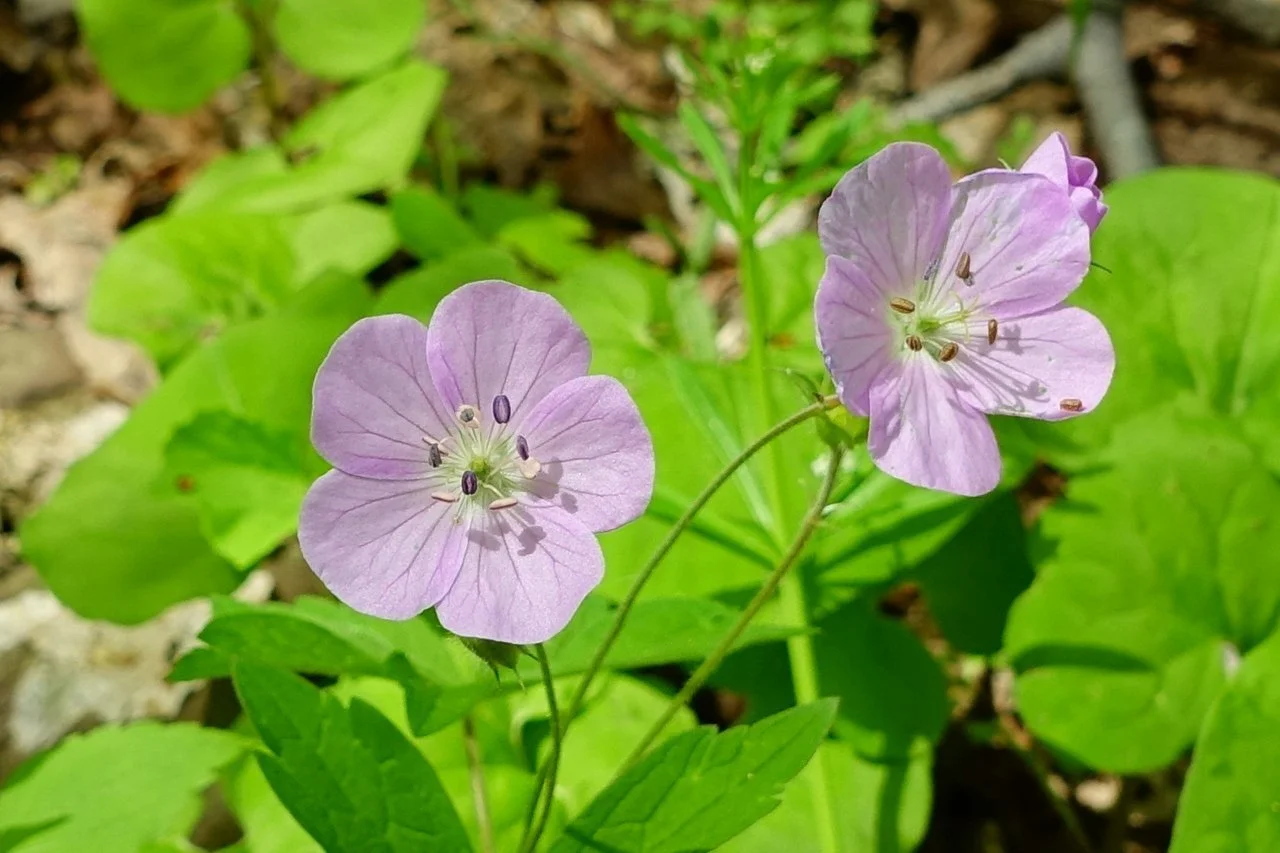
Flowers: Features saucer-shaped, five-petaled blooms. Colors range from soft pink and lavender to lilac.
Foliage: Deeply lobed, dark green leaves that form attractive mounds.
Wildlife Value: A critical early nectar source for native bees, butterflies, and syrphid flies. It also serves as a host plant for numerous moth and butterfly species.
Growing Requirements
Light: Prefers partial shade to full shade, but can tolerate full sun if the soil is kept consistently moist.
Soil: Thrives in rich, moist, well-drained loamy soil, though it is adaptable to various soil types once established.
Maintenance: Low-maintenance and generally deer- and rabbit-resistant. If foliage declines in summer heat, it can be lightly sheared to encourage fresh growth.
Landscape Uses
Groundcover: Excellent for massing in woodland gardens or shaded borders.
Companions: Pairs beautifully with other shade-loving natives like ferns, trilliums, columbine, and woodland phlox.
Naturalization: Gently spreads via rhizomes and self-seeding to form attractive colonies without becoming invasive.
Key Attributes
Flowers: Features saucer-shaped, five-petaled blooms. Colors range from soft pink and lavender to lilac.
Foliage: Deeply lobed, dark green leaves that form attractive mounds.
Wildlife Value: A critical early nectar source for native bees, butterflies, and syrphid flies. It also serves as a host plant for numerous moth and butterfly species.
Growing Requirements
Light: Prefers partial shade to full shade, but can tolerate full sun if the soil is kept consistently moist.
Soil: Thrives in rich, moist, well-drained loamy soil, though it is adaptable to various soil types once established.
Maintenance: Low-maintenance and generally deer- and rabbit-resistant. If foliage declines in summer heat, it can be lightly sheared to encourage fresh growth.
Landscape Uses
Groundcover: Excellent for massing in woodland gardens or shaded borders.
Companions: Pairs beautifully with other shade-loving natives like ferns, trilliums, columbine, and woodland phlox.
Naturalization: Gently spreads via rhizomes and self-seeding to form attractive colonies without becoming invasive.