
 Image 1 of 1
Virginia Bluebells is a native North American perennial wildflower cherished for its stunning spring display. It is a spring ephemeral, meaning its foliage emerges in early spring, blooms, and then dies back to the ground by mid-summer, remaining dormant until the next spring.
Key Characteristics
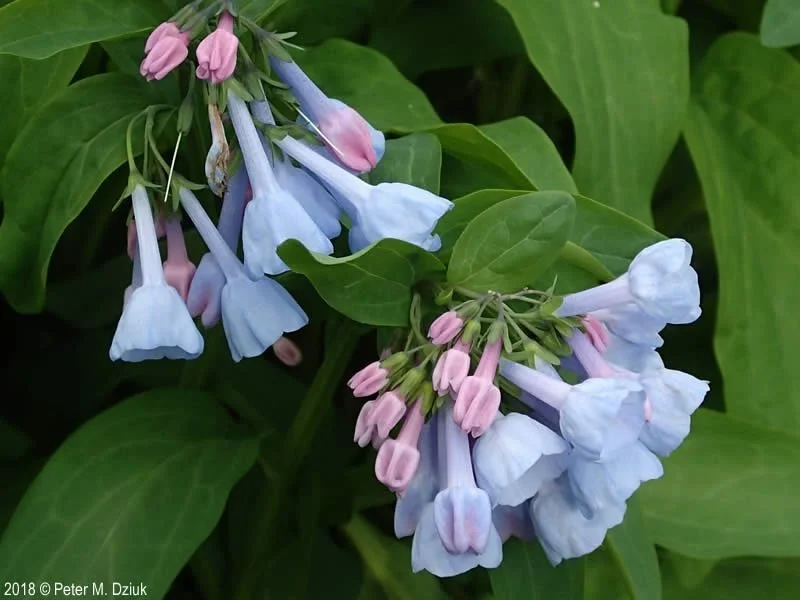
Appearance: Plants grow in erect, clump-forming clusters, typically 1 to 2 feet tall. The leaves are smooth, oval, and an attractive bluish-green color. The flower buds are a distinctive pink and open into nodding, trumpet-shaped, light blue flowers that are about 1 inch long.
Blooming Period: It blooms in mid-spring (typically April to May in most regions), with the flowers lasting for about three weeks.
Habitat: Virginia bluebells thrive in moist, rich soils in part to full shade, and are often found in bottomland forests and along river floodplains.
Pollinators: The flowers are a valuable nectar source and attract long-tongued bees (like bumblebees), butterflies, skippers, and hummingbirds.
Cultivation and Care
Virginia bluebells are relatively low-maintenance when planted in the right conditions.
Light: Prefers partial to full shade. They do well under deciduous trees, as they receive sunlight before the tree canopy fills in.
Soil: Requires moist, well-drained, nutrient-rich soil.
Companion Plants: Because they go dormant in summer, they are best interplanted with other perennials like hostas, ferns, or astilbes that will fill the empty space later in the season.
Propagation: The plants self-seed and naturalize easily in ideal conditions. Established plants should generally not be disturbed due to their deep, fragile taproot system.
Virginia Bluebells is a native North American perennial wildflower cherished for its stunning spring display. It is a spring ephemeral, meaning its foliage emerges in early spring, blooms, and then dies back to the ground by mid-summer, remaining dormant until the next spring.
Key Characteristics
Appearance: Plants grow in erect, clump-forming clusters, typically 1 to 2 feet tall. The leaves are smooth, oval, and an attractive bluish-green color. The flower buds are a distinctive pink and open into nodding, trumpet-shaped, light blue flowers that are about 1 inch long.
Blooming Period: It blooms in mid-spring (typically April to May in most regions), with the flowers lasting for about three weeks.
Habitat: Virginia bluebells thrive in moist, rich soils in part to full shade, and are often found in bottomland forests and along river floodplains.
Pollinators: The flowers are a valuable nectar source and attract long-tongued bees (like bumblebees), butterflies, skippers, and hummingbirds.
Cultivation and Care
Virginia bluebells are relatively low-maintenance when planted in the right conditions.
Light: Prefers partial to full shade. They do well under deciduous trees, as they receive sunlight before the tree canopy fills in.
Soil: Requires moist, well-drained, nutrient-rich soil.
Companion Plants: Because they go dormant in summer, they are best interplanted with other perennials like hostas, ferns, or astilbes that will fill the empty space later in the season.
Propagation: The plants self-seed and naturalize easily in ideal conditions. Established plants should generally not be disturbed due to their deep, fragile taproot system.