
 Image 1 of 1
Unlike its taller relatives, this species is favored for its "well-behaved" clumping habit and high resistance to powdery mildew.
Key Characteristics
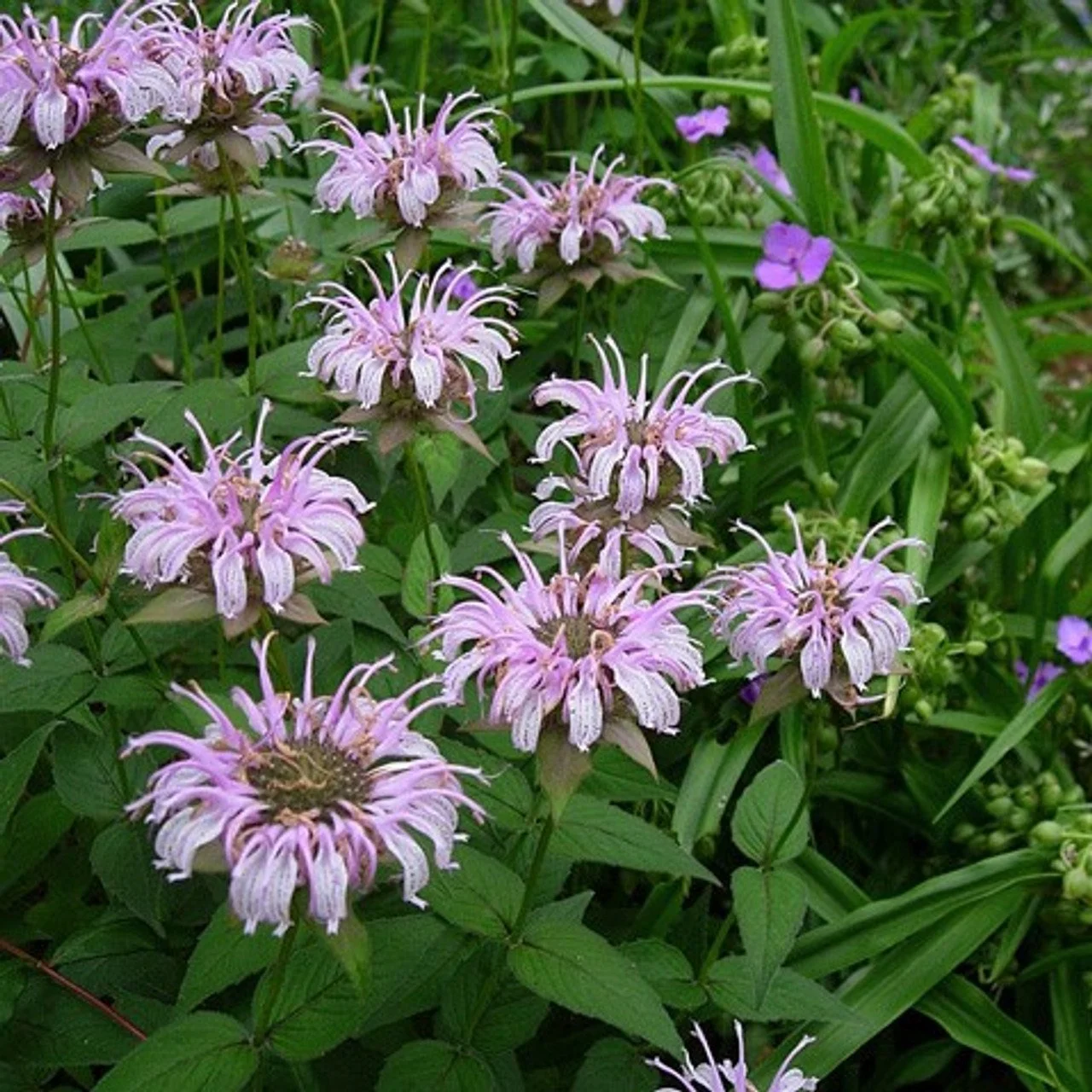
Appearance: Typically grows 1–2 feet tall and wide in a neat, mounded form. It features light pink to lavender tubular flowers with distinct purple spots on the lower lip.
Blooming Period: One of the earliest Monardas to bloom, appearing in late spring to early summer (May–June), often bridging the gap between spring ephemerals and summer perennials.
Foliage: The gray-green leaves are aromatic (scented like oregano or mint) and turn a striking burgundy-red in the fall.
Wildlife Support: A powerhouse for pollinators, it attracts bumblebees, butterflies, and hummingbirds. It is also a host plant for the Raspberry Pyrausta Moth.
Growing Conditions
Light: Prefers full sun to partial shade.
Soil: Highly adaptable, thriving in dry to medium, well-drained soils, including rocky, sandy, or loamy types.
Hardiness: Generally hardy in USDA Zones 5–8.
Maintenance: Low maintenance once established. Deadheading spent flowers can encourage a second flush and prevents excessive self-seeding.
Unlike its taller relatives, this species is favored for its "well-behaved" clumping habit and high resistance to powdery mildew.
Key Characteristics
Appearance: Typically grows 1–2 feet tall and wide in a neat, mounded form. It features light pink to lavender tubular flowers with distinct purple spots on the lower lip.
Blooming Period: One of the earliest Monardas to bloom, appearing in late spring to early summer (May–June), often bridging the gap between spring ephemerals and summer perennials.
Foliage: The gray-green leaves are aromatic (scented like oregano or mint) and turn a striking burgundy-red in the fall.
Wildlife Support: A powerhouse for pollinators, it attracts bumblebees, butterflies, and hummingbirds. It is also a host plant for the Raspberry Pyrausta Moth.
Growing Conditions
Light: Prefers full sun to partial shade.
Soil: Highly adaptable, thriving in dry to medium, well-drained soils, including rocky, sandy, or loamy types.
Hardiness: Generally hardy in USDA Zones 5–8.
Maintenance: Low maintenance once established. Deadheading spent flowers can encourage a second flush and prevents excessive self-seeding.