
 Image 1 of 1
Quick Facts
Height: typically 2–4 feet, occasionally reaching 5 feet.
Bloom Time: Late summer to fall (typically August to October).
Key Characteristics
Foliage: The lower leaves are notably heart-shaped (cordate) and sharply toothed, while upper leaves are smaller and more oval (ovate).
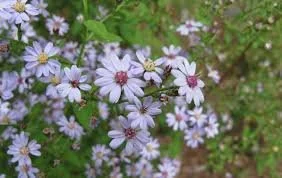
Flowers: Prolific clusters of small, daisy-like flowers. Rays range from pale blue to rich violet (rarely white), surrounding a center disk that starts yellow and matures to red or purple after pollination.
Habit: Features an upright, branching, and sometimes arching form. It can be aggressive in gardens due to self-seeding and spreading via rhizomes.
Growing Conditions
Light: Thrives in part shade to full sun; it is one of the more shade-tolerant aster species.
Soil: Prefers rich, moist, well-drained soils but is highly adaptable to clay and dry conditions.
Maintenance: Low maintenance. You can pinch back stems by mid-July to create a bushier plant and prevent the need for staking.
Quick Facts
Height: typically 2–4 feet, occasionally reaching 5 feet.
Bloom Time: Late summer to fall (typically August to October).
Key Characteristics
Foliage: The lower leaves are notably heart-shaped (cordate) and sharply toothed, while upper leaves are smaller and more oval (ovate).
Flowers: Prolific clusters of small, daisy-like flowers. Rays range from pale blue to rich violet (rarely white), surrounding a center disk that starts yellow and matures to red or purple after pollination.
Habit: Features an upright, branching, and sometimes arching form. It can be aggressive in gardens due to self-seeding and spreading via rhizomes.
Growing Conditions
Light: Thrives in part shade to full sun; it is one of the more shade-tolerant aster species.
Soil: Prefers rich, moist, well-drained soils but is highly adaptable to clay and dry conditions.
Maintenance: Low maintenance. You can pinch back stems by mid-July to create a bushier plant and prevent the need for staking.