
 Image 1 of 1
Key Characteristics
Size: One of the smallest varieties, typically reaching only 3–6 inches (occasionally up to 12") in height.
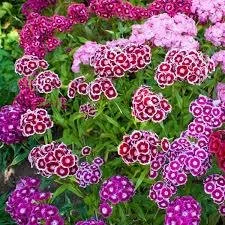
Appearance: Features flat-topped clusters of fragrant, "fringed" or "frilled" blooms in shades of red, pink, white, and bicolors.
Life Cycle: Generally grown as an annual or biennial, though it can act as a short-lived perennial in ideal conditions. Unlike many Sweet Williams that require a second year to bloom, 'Wee Willie' often flowers within 6–10 weeks of sowing.
Wildlife: Highly attractive to bees, butterflies, and hummingbirds due to its fragrance and nectar.
Growing & Care Tips
Sunlight: Thrives in full sun (at least 6–8 hours) but can tolerate light afternoon shade in hot climates.
Soil: Prefers rich, well-drained soil with a neutral to slightly alkaline pH (6.0–8.0).
Watering: Requires average watering; keep soil evenly moist but avoid saturation to prevent crown rot.
Maintenance: Deadheading spent flowers promotes continued blooming and prevents excessive self-seeding.
Key Characteristics
Size: One of the smallest varieties, typically reaching only 3–6 inches (occasionally up to 12") in height.
Appearance: Features flat-topped clusters of fragrant, "fringed" or "frilled" blooms in shades of red, pink, white, and bicolors.
Life Cycle: Generally grown as an annual or biennial, though it can act as a short-lived perennial in ideal conditions. Unlike many Sweet Williams that require a second year to bloom, 'Wee Willie' often flowers within 6–10 weeks of sowing.
Wildlife: Highly attractive to bees, butterflies, and hummingbirds due to its fragrance and nectar.
Growing & Care Tips
Sunlight: Thrives in full sun (at least 6–8 hours) but can tolerate light afternoon shade in hot climates.
Soil: Prefers rich, well-drained soil with a neutral to slightly alkaline pH (6.0–8.0).
Watering: Requires average watering; keep soil evenly moist but avoid saturation to prevent crown rot.
Maintenance: Deadheading spent flowers promotes continued blooming and prevents excessive self-seeding.