
 Image 1 of 1
Core Characteristics
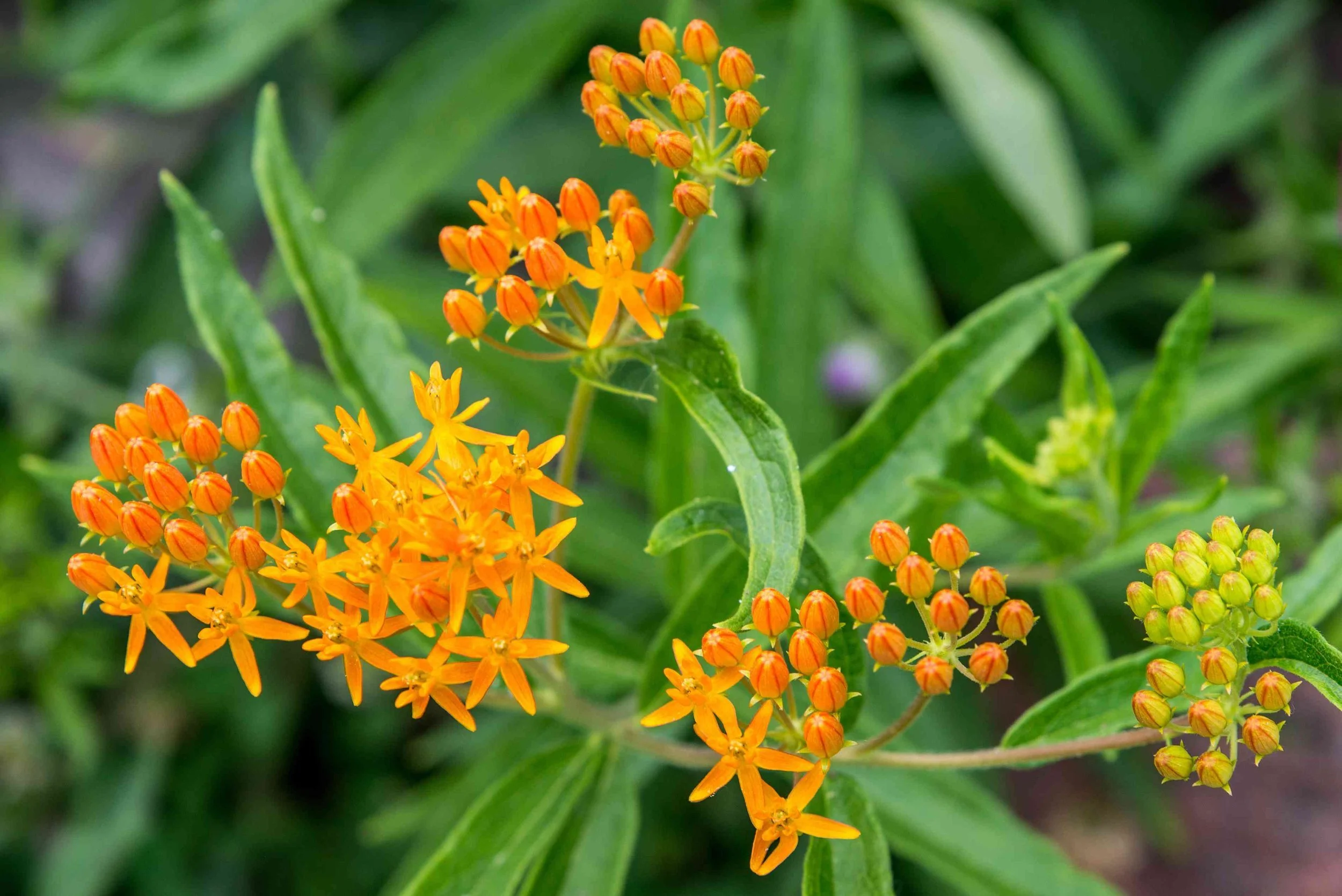
Appearance: Grows in clumps 1–3 feet tall with stiff, hairy stems and narrow, lance-shaped leaves.
Blooms: Features flat-topped clusters of vivid orange (occasionally yellow or reddish) flowers from June through September.
Wildlife Support:
Host Plant: Essential food source for Monarch, Queen, and Grey Hairstreak butterfly caterpillars.
Nectar Source: Highly attractive to bees, hummingbirds, and various butterfly species.
Gardening & Growth Tips
Light & Soil: Requires full sun (at least 6 hours daily) and prefers well-drained, sandy, or gravelly soil. It is highly drought-tolerant once established due to its deep taproot.
Planting:
Patience: It is often late to emerge in the spring—sometimes not until late May—and may take 2–3 years to bloom from seed.
Maintenance: Once established, it should not be moved; the deep taproot makes transplanting very difficult and often unsuccessful.
Deer Resistance: Generally ignored by deer because its leaves contain bitter cardiac glycosides.
Core Characteristics
Appearance: Grows in clumps 1–3 feet tall with stiff, hairy stems and narrow, lance-shaped leaves.
Blooms: Features flat-topped clusters of vivid orange (occasionally yellow or reddish) flowers from June through September.
Wildlife Support:
Host Plant: Essential food source for Monarch, Queen, and Grey Hairstreak butterfly caterpillars.
Nectar Source: Highly attractive to bees, hummingbirds, and various butterfly species.
Gardening & Growth Tips
Light & Soil: Requires full sun (at least 6 hours daily) and prefers well-drained, sandy, or gravelly soil. It is highly drought-tolerant once established due to its deep taproot.
Planting:
Patience: It is often late to emerge in the spring—sometimes not until late May—and may take 2–3 years to bloom from seed.
Maintenance: Once established, it should not be moved; the deep taproot makes transplanting very difficult and often unsuccessful.
Deer Resistance: Generally ignored by deer because its leaves contain bitter cardiac glycosides.