
 Image 1 of 1
Quick Facts & Care
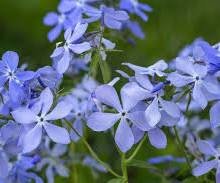
Appearance: Features loose clusters of lavender, blue-violet, or pale blue five-petaled flowers atop 10–15 inch stems.
Light: Prefers partial to full shade.
Soil: Thrives in rich, moist, well-drained, and organic-rich soil.
Wildlife: Highly attractive to pollinators like butterflies, hummingbirds, and clearwing moths.
Spacing: Recommended spacing for planting is 10–12 inches apart.
Maintenance Tips
Pruning: Cutting back the spent flower stems after blooming helps avoid powdery mildew and can rejuvenate the foliage.
Spreading: It spreads slowly via rhizomatous roots and self-sowing, eventually forming attractive mats.
Challenges: Susceptible to powdery mildew and spider mites in dry conditions; it is also a favorite snack for rabbits.
Quick Facts & Care
Appearance: Features loose clusters of lavender, blue-violet, or pale blue five-petaled flowers atop 10–15 inch stems.
Light: Prefers partial to full shade.
Soil: Thrives in rich, moist, well-drained, and organic-rich soil.
Wildlife: Highly attractive to pollinators like butterflies, hummingbirds, and clearwing moths.
Spacing: Recommended spacing for planting is 10–12 inches apart.
Maintenance Tips
Pruning: Cutting back the spent flower stems after blooming helps avoid powdery mildew and can rejuvenate the foliage.
Spreading: It spreads slowly via rhizomatous roots and self-sowing, eventually forming attractive mats.
Challenges: Susceptible to powdery mildew and spider mites in dry conditions; it is also a favorite snack for rabbits.