
 Image 1 of 1
Unlike the full-sized species which can reach 12 feet, dwarf varieties typically mature at 4 to 6 feet tall and wide.
Key Characteristics
Spring: Produces flat-topped clusters of creamy white flowers in May that attract pollinators. New foliage often emerges with a reddish tint.
Summer: Features dark green, maple-like, three-lobed leaves.
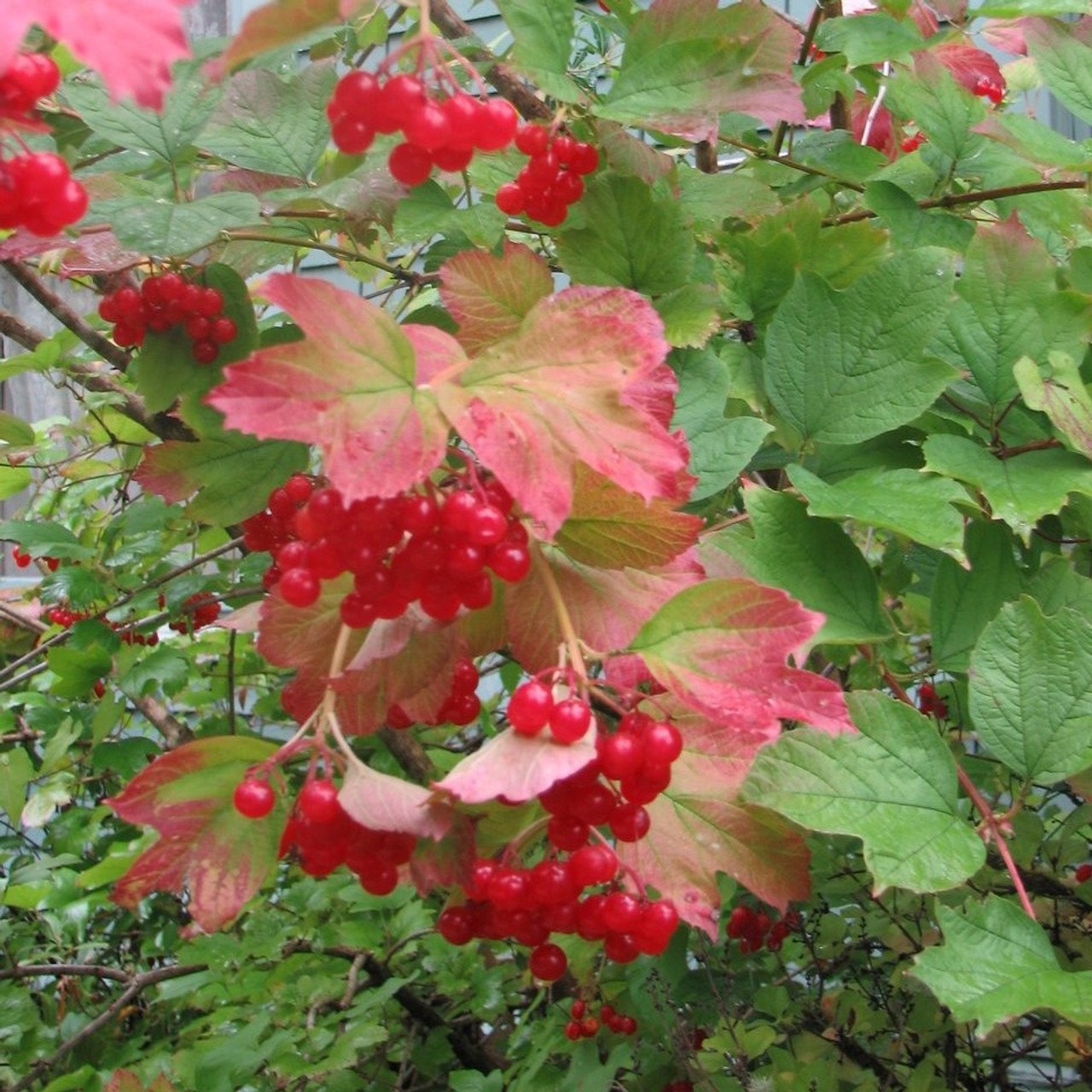
Fall: Foliage turns brilliant shades of red, orange, or deep burgundy.
Winter: Bears clusters of bright red, persistent berries (drupes) that provide vital food for birds and wildlife during colder months.
Growing Requirements
Light: Prefers full sun to partial shade. At least 4-6 hours of sun is recommended for the best flower and fruit production.
Soil: Thrives in moist, well-drained soils but is highly adaptable to various types, including clay and wet sites. It does not tolerate drought well.
Maintenance: Low maintenance. Pruning should be done immediately after flowering to avoid removing the next year's buds, as it blooms on "old wood".
Unlike the full-sized species which can reach 12 feet, dwarf varieties typically mature at 4 to 6 feet tall and wide.
Key Characteristics
Spring: Produces flat-topped clusters of creamy white flowers in May that attract pollinators. New foliage often emerges with a reddish tint.
Summer: Features dark green, maple-like, three-lobed leaves.
Fall: Foliage turns brilliant shades of red, orange, or deep burgundy.
Winter: Bears clusters of bright red, persistent berries (drupes) that provide vital food for birds and wildlife during colder months.
Growing Requirements
Light: Prefers full sun to partial shade. At least 4-6 hours of sun is recommended for the best flower and fruit production.
Soil: Thrives in moist, well-drained soils but is highly adaptable to various types, including clay and wet sites. It does not tolerate drought well.
Maintenance: Low maintenance. Pruning should be done immediately after flowering to avoid removing the next year's buds, as it blooms on "old wood".