
 Image 1 of 1
Key Characteristics
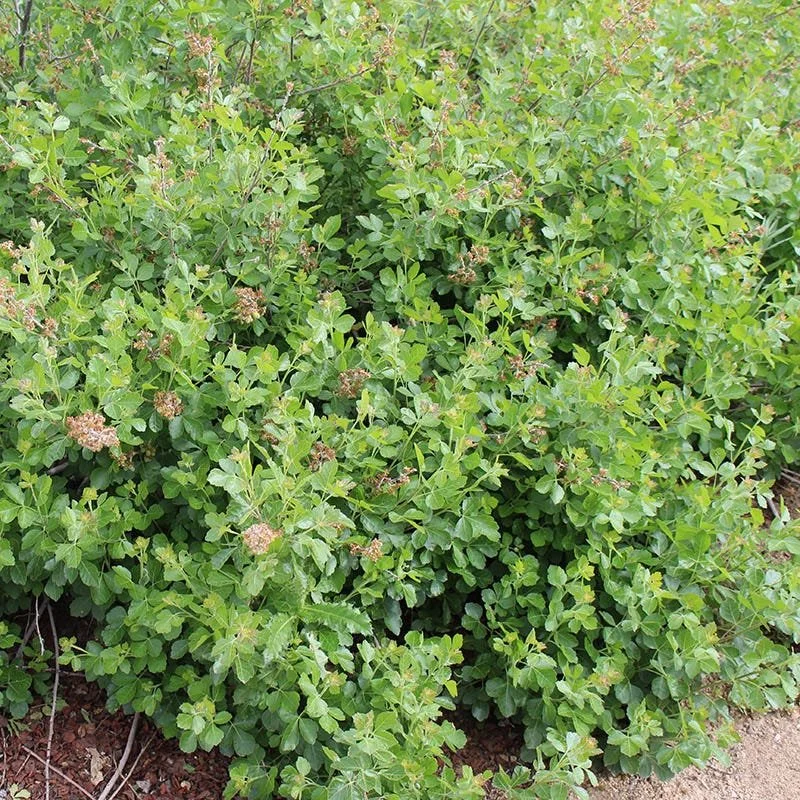
Size & Habit: Typically grows 1.5 to 2.5 feet tall and spreads aggressively to 6 to 8 feet wide. Its low, mounding form makes it an excellent woody groundcover.
Foliage: Features glossy, trifoliate (three-leaflet) green leaves that resemble poison ivy but are completely non-poisonous. The foliage and stems emit a pleasant citrus-like fragrance when crushed or brushed against.
Seasonal Color:
Spring: Produces small, inconspicuous yellow flowers before leaves emerge.
Fall: Renowned for its brilliant autumnal display, turning vibrant shades of orange, scarlet red, and burgundy.
Fruit: Female plants may produce clusters of small, hairy red berries in late summer that persist into winter, providing food for birds and wildlife.
Growing Conditions
Sunlight: Performs best in full sun to partial shade. While it can tolerate deeper shade, it will be shorter and less dense.
Soil: Highly adaptable to most soil types, including clay, sandy, rocky, and poor soils. It requires well-drained locations and does not tolerate soggy, poorly drained soil.
Durability: Once established, it is exceptionally drought-tolerant, salt-tolerant, and resistant to deer and rabbits.
Key Characteristics
Size & Habit: Typically grows 1.5 to 2.5 feet tall and spreads aggressively to 6 to 8 feet wide. Its low, mounding form makes it an excellent woody groundcover.
Foliage: Features glossy, trifoliate (three-leaflet) green leaves that resemble poison ivy but are completely non-poisonous. The foliage and stems emit a pleasant citrus-like fragrance when crushed or brushed against.
Seasonal Color:
Spring: Produces small, inconspicuous yellow flowers before leaves emerge.
Fall: Renowned for its brilliant autumnal display, turning vibrant shades of orange, scarlet red, and burgundy.
Fruit: Female plants may produce clusters of small, hairy red berries in late summer that persist into winter, providing food for birds and wildlife.
Growing Conditions
Sunlight: Performs best in full sun to partial shade. While it can tolerate deeper shade, it will be shorter and less dense.
Soil: Highly adaptable to most soil types, including clay, sandy, rocky, and poor soils. It requires well-drained locations and does not tolerate soggy, poorly drained soil.
Durability: Once established, it is exceptionally drought-tolerant, salt-tolerant, and resistant to deer and rabbits.